

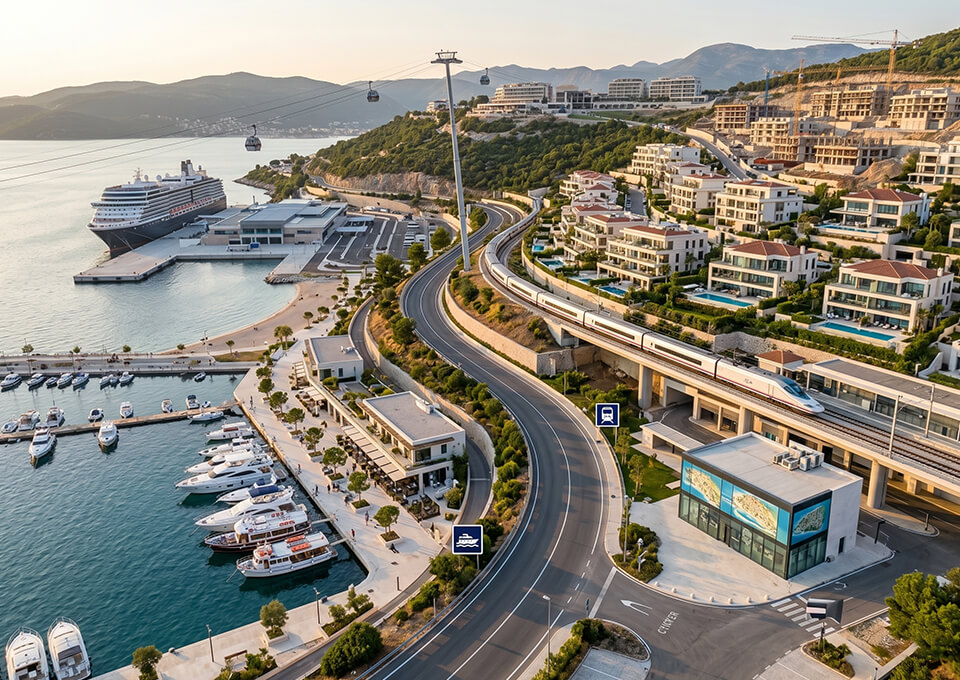
Mauritius is one of the most successful tourism destinations in the Indian Ocean region, and tourism is among the most powerful drivers of real estate demand and value on the island. The relationship between tourism infrastructure, airports, roads, hotels, marinas, golf courses, and the network of services that supports the island’s visitor economy, and property values is direct, well-established, and historically consistent. Understanding this relationship with precision is essential for any investor seeking to navigate the Mauritius real estate market effectively.
The Apavou Group, operating across Mauritius and the Indian Ocean region for more than four decades under the leadership of Armand Apavou, has an intimate understanding of how tourism infrastructure development shapes real estate demand and values across the island. Projects like Plaisance Mall, located in the Plaisance corridor adjacent to the international airport, Terre d’Été, and The Cube reflect the group’s ability to identify and develop real estate in locations where tourism infrastructure creates and sustains durable demand for quality commercial and residential space over the long term.
How Tourism Infrastructure Creates Real Estate Value
Tourism infrastructure creates real estate value through several interconnected mechanisms that compound over time. The most direct is demand creation: the arrival of large volumes of international visitors, Mauritius typically welcomes well over a million international tourists annually in normal years, creates demand for accommodation, food and beverage, retail, leisure, and business services. This demand is directly reflected in the real estate that provides these services, driving occupancy, rental rates, and ultimately capital values in the hospitality, commercial, and premium residential segments.
The second mechanism is accessibility improvement. Major tourism infrastructure investments, particularly the expansion of Sir Seewoosagur Ramgoolam International Airport and the continued improvement of the island’s road network, improve the accessibility of previously remote or underserved parts of Mauritius. This accessibility improvement directly affects property values in the areas served, bringing locations that were previously difficult to reach into the orbit of viable investment and development for both domestic and international buyers.
Sir Seewoosagur Ramgoolam International Airport as a Real Estate Demand Anchor
The Sir Seewoosagur Ramgoolam International Airport (SSR Airport) is the primary international gateway to Mauritius, and its capacity, connectivity, and quality have a direct bearing on the volume of international arrivals and the consequent demand for tourism-related real estate across the island. The airport’s continued development, including terminal upgrades, route network expansion, and improved access infrastructure, has been a significant driver of real estate demand in the south and east of the island, where the airport’s economic influence is most direct.
The Plaisance corridor, in which Plaisance Mall, one of the Apavou Group’s signature commercial developments, is strategically located, benefits directly from the airport’s central role as an economic anchor for the surrounding area. The concentration of business activity, international hospitality facilities, and commercial services in this corridor reflects the airport’s sustained function as a demand generator for quality real estate over multiple economic cycles. Investors who understood the airport’s role as a long-term demand anchor identified quality opportunities in the surrounding real estate market well in advance of those opportunities becoming widely visible.
Air Connectivity as a Leading Indicator for Mauritius Property Market Performance
Changes in air connectivity, the introduction of new direct routes to Mauritius, increased flight frequencies from key source markets, or the arrival of new airline operators are among the most reliable leading indicators for subsequent changes in tourism demand and, consequently, for real estate market conditions in the affected segments. The expansion of direct flights from European markets, from the Middle East, and increasingly from India and China has broadened the international buyer and visitor pool for Mauritius real estate and supported sustained demand in the premium residential and hospitality segments. Investors who systematically monitor air connectivity developments as part of their Mauritius market analysis gain an early signal of demand shifts that will subsequently materialise in transaction volumes and pricing data.
Hotel Development and Its Effect on Mauritius Residential Values
The development of high-quality international hotel and resort infrastructure in Mauritius has had a transformative effect on residential property values in surrounding areas, an effect that has been documented repeatedly across different parts of the island as successive waves of luxury resort development have arrived. The establishment of a luxury resort operator in a previously undeveloped coastal location typically initiates a cascade of value creation: the resort’s international brand and marketing infrastructure raise the profile of the area with high-net-worth buyers globally, generating buyer interest for branded residential units within the resort as well as for properties in the surrounding area.
This hotel-driven residential value creation has been particularly pronounced on the western coast of Mauritius, where the concentration of internationally branded luxury properties, including some of the most celebrated hotel brands in the world, has transformed previously undeveloped or modestly developed coastal areas into some of the highest-value real estate locations in the entire Indian Ocean region. The Apavou Group’s understanding of this hotel-driven value creation dynamic has informed its investment approach in locations where hotel development was anticipated before it was fully reflected in market prices.
Marina and Waterfront Development as Value Catalysts in Mauritius
Marina and waterfront development is another category of tourism infrastructure that consistently catalyses significant real estate value creation in the areas it serves. Marinas provide facilities for leisure boating that attract a high-net-worth demographic, creating sustained demand for marina-facing residential, commercial, and hospitality real estate that commands meaningful premiums over comparable non-waterfront properties. The development of quality marina facilities in Mauritius has been an important driver of premium real estate value in the northern and western parts of the island, where these facilities are concentrated.
For the Apavou Group, the understanding of how marina and waterfront infrastructure create and sustain real estate value premiums in the Mauritius market has informed asset positioning decisions across the portfolio. The group’s long market presence has allowed it to observe these dynamics across multiple development cycles, building an evidential understanding of how waterfront infrastructure affects the full range of adjacent real estate categories.
Commercial Real Estate and the Tourism Service Economy
Tourism creates demand not only for accommodation and leisure facilities but for the full range of commercial services that visitors and the substantial tourism industry workforce require. Retail, food and beverage, business services, logistics, healthcare, and education for the families of tourism industry employees all generate demand for commercial real estate that is directly and sustainably linked to the health and continued growth of the tourism economy.
Commercial developments that serve the tourism economy, like Plaisance Mall, which serves the commercial needs of the airport corridor’s growing business community and the substantial residential population of the surrounding area, benefit from the stable, institutionally supported demand that established tourism infrastructure creates. This tourism-driven commercial demand is typically less cyclically volatile than pure domestic retail demand, because the international visitor economy sustains commercial activity even during periods when local consumer spending may be constrained.
Infrastructure Gaps and Their Effect on Real Estate Development Potential
While tourism infrastructure creates real estate value, infrastructure gaps, inadequate road access, unreliable utility services, insufficient sewage treatment capacity, or poor telecommunications connectivity constrain development potential and suppress property values in the areas they affect. In Mauritius, infrastructure quality varies across the island, and investors and developers must assess the infrastructure baseline of specific development sites carefully rather than assuming that the island’s generally high infrastructure standards apply uniformly to every location.
The Apavou Group’s development process includes rigorous infrastructure assessment as a standard component of site evaluation for all major projects. Understanding both the current infrastructure baseline and the planned public infrastructure investments in a target area, including road improvement programmes, utility expansion plans, and public amenity development, is essential to accurately projecting the long-term development potential and value trajectory of any specific real estate asset in the Mauritius market.
Conclusion, Tourism Infrastructure as the Foundation of Mauritius Property Value
In Mauritius, tourism infrastructure is not a background condition for real estate investment. It is one of the primary active drivers of value, demand, and investment opportunity that distinguishes the island’s property market from less tourism-integrated alternatives in the region. Investors who understand precisely how specific infrastructure developments, airports, hotels, marinas, roads, and resort amenities, create and sustain property value in the Mauritius context are better positioned to identify opportunities, assess risk, and build portfolios that benefit from the island’s continued development as one of the Indian Ocean region’s premier tourism and investment destinations. This understanding is at the core of how the Apavou Group has approached real estate investment in Mauritius across four decades, and it continues to guide the group’s development decisions as it identifies the next generation of opportunities on the island.
 Previous Post
 Next Post